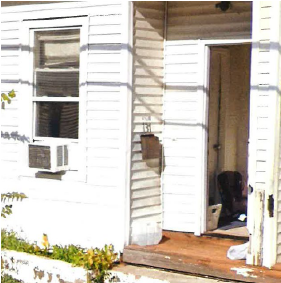
The court concludes that plaintiff’s apartment’s breezeway is curtilage, but the officers get qualified immunity because there’s no case on point. They remained there after being told to leave. Sabey v. Butterfield, 2026 U.S. Dist. LEXIS 52309 (D. Mass. Mar. 13, 2026):
“In his objections, Marshall adds other points to his substantial showing argument. First he argues recklessness can be inferred from the fact the agent made the same mistake twice: in the warrant affidavit and when interviewing Marshall ‘to convince him to confess.’ … The Court does not agree. She obtained the warrant the day before arresting and interviewing Marshall. That she had the same misinformation in her head two days in a row does not suggest intentionality or recklessness on either occasion. Perhaps Marshall’s argument makes more sense if one believes she was trying to convince him to confess by misleading him. But, as stated above, the audio tape of that interaction does not support his allegation. Special Agent Dervish was not hostile or disrespectful to Marshall, overly aggressive in challenging his statement, or feeding him false information throughout the interview. Her demeanor in the interview—calm and professional— supports the Court’s conclusion that no evidence suggests she intentionally or recklessly misrepresented the IP address.” United States v. Marshall, 2026 U.S. Dist. LEXIS 51939 (N.D. Ga. Mar. 13, 2026).
Wisconsin DOC violates those on extended supervision on GPS monitoring when the signal stops without even inquiring whether there was equipment failure or other benign cause. The court certifies the proposed class. Robillard v. Knutson, 2026 U.S. Dist. LEXIS 52203 (E.D. Wis. Mar. 13, 2026).*
Posted inFranks doctrine, Probation / Parole search|Comments Off on N.D.Ga.: A Franks violation isn’t shown to be reckless just because a factual mistake was repeated
AUSA in an immigration detention case was directed to respond to the detainee’s Fourth Amendment claim and completely failed, only repeating the government’s theory of the case. Petitioner was finally released. The AUSA doesn’t get sanctioned, but the court is troubled by the dissembling. Torre v. Lyons, DJC-CSK, 2026 U.S. Dist. LEXIS 51525 (E.D. Cal. Mar. 12, 2026)*:
Posted inImmigration arrests|Comments Off on E.D.Cal.: AUSA avoids sanction for refusing to answer court’s 4A question in ICE case; the petitioner had already been released
The stop was for investigation of prostitution, and the driver fled. “The record reflects that Carter intended to place Williams in his cruiser for safety reasons and for investigating suspected prostitution—and not merely for checking Williams’s license or for the officer’s own convenience. Carter was denied the opportunity to do so when Williams fled. In other words, Williams’s flight terminated the traffic stop before it was ever extended, and Carter’s intentions were preempted when Carter ran. … Regardless of whether Carter intended to issue a citation or a warning, or neither, however, the stop was not prolonged before Williams fled. Video of the traffic stop supports this conclusion.” State v. Williams, 2026-Ohio-860 (2d Dist. Mar. 13, 2026).*
The encounter was not a stop and it was consensual. The officer parked near defendant but didn’t block him. The USMJ’s conclusion on disputed facts must govern. United States v. Moore, 2026 U.S. App. LEXIS 7494 (11th Cir. Mar. 13, 2026).*
The search of defendant’s bag after he was in a holding cell on a probation arrest was not justifiable as a search incident. [No mention of inventory; therefore, this will not go in the book supplement.] People v. Allen, 2026 NY Slip Op 50289(U) (Kings Co. Mar. 9, 2026) (unpublished).*
Defendant’s temporary paper plate was wrinkled and illegible, and that led to the stop. The car was also known to frequent drug houses. Stop still valid. State v. Martin, 347 Or. App. 680 (Mar. 11, 2026).*
The individual facts didn’t show probable cause, but collectively they did. Also, this was more than guilt by association. “The Court therefore agrees with Judge Carson that the circumstances of the defendant’s arrest are more consistent with Pringle than either Ybarra or Di Re, and the Court finds that Deputy Costa had probable cause to arrest the defendant.” United States v. Garcia, 2026 U.S. Dist. LEXIS 50859 (D. Neb. Mar. 12, 2026).*
Defendant probationer’s positive tests were reasonable suspicion for a home search. United States v. James, 2026 U.S. Dist. LEXIS 51549 (W.D. Pa. Mar. 12, 2026).*
Qualified immunity in excessive force cases can be raised for the first time mid-trial without it being waived. Edwards v. Grubbs, 2026 U.S. App. LEXIS 7500 (11th Cir. Mar. 13, 2026).
“However, Groth must show not only that the officers used force unreasonably, but also that ‘every reasonable officer would have realized that [the challenged] conduct violated the Fourth Amendment under our then-existing precedent.’ … The burden therefore rests on the plaintiff to identify published, controlling authority with closely comparable facts that would bind a panel of this court and place the constitutional question beyond debate at the time of the incident.” Davis v. Dean, 2026 U.S. Dist. LEXIS 49953 (D. Md. Mar. 11, 2026).*
Sex acts between an officer and a previous detainee were not Fourth Amendment seizures. Other courts in this circuit agree, and they’re followed. A case from the Seventh Circuit would disagree, but it’s not followed. Resendiz v. Christian, 2026 U.S. Dist. LEXIS 51932 (N.D. Ga. Mar. 12, 2026).*
The N.D. Ala. certified this question: “Under [Ala. Code 1975,] § 15-5-30, when a law enforcement officer asks a person for his name, address, and explanation of his actions, and the person gives an incomplete or unsatisfactory oral response, does the statute prohibit the officer from demanding or requesting physical identification?” No. Jennings v. Smith, 2026 Ala. LEXIS 28 (Mar. 13, 2026):
A dead co-conspirator’s phone was searched linking defendants to the crime. The police reasonably believed his mother had authority to consent to the phone. The California Electronic Communications Privacy Act (CalECPA) (Cal. Pen. Code § 1546 et seq.) applies, and the AG concedes any Fourth Amendment standing requirement was legislated out. The good faith exception, however, applies to the consent issue. His mother was the only apparent next of kin, and she knew he was dead, and she accepted his other property from the police. People v. Anderson, 2026 Cal. App. LEXIS 150 (6th Dist. Mar. 13, 2026):
Officers get qualified immunity for arrestee who was alleged to have resisted booking and was removed, while handcuffed behind his back, to an intake cell with a concrete bed, and he hit the floor with his face when “pushed” down. Raddant v. Douglas Cty., 2026 U.S. App. LEXIS 7380 (7th Cir. Mar. 12, 2026)* [I quoted a lot of this one because I tried a criminal case against a jailer a lot like this. Directed verdict. They will take you down to the floor. That happened in my case, but my client wasn’t even there when it happened. His was in the cell later.]:
A traffic stop on the curtilage affords police the ability to stop and inquire under Collins v. Virginia. “Curtilage is a concept that safeguards a person’s right to be free from unreasonable searches and seizures, but it is not a protective force field that shields a person from the consequences of committing a traffic infraction in front of a police officer simply because the driver then reaches the safety of home.” Hardy v. McGaha, 2026 U.S. Dist. LEXIS 52525 (D. Utah Mar. 12, 2026).
Defendant contends that the officer was “deceitful” because he said he had reasonable suspicion and could apply for a warrant (which requires probable cause). However, defendant had no DL, so the vehicle could be towed anyway. Ultimately it was by consent. United States v. Gonzalez-Nieves, 2026 U.S. Dist. LEXIS 52542 (M.D. Pa. Mar. 13, 2026).*
Defendant doesn’t tell the court how the Fourth Amendment was violated. People v. Clase, 2026 NY Slip Op 50297(U) (N.Y. Co. Mar. 10, 2026).*
There was probable cause to search the picture files in defendant’s cell phone beyond the app defendant used. It was reasonable to conclude pictures could be moved between places on the phone. United States v. Ingram, 2026 CCA LEXIS 119 (Army. Ct. Crim. App. Mar. 9, 2026) (unpublished).
Officers had reasonable suspicion to stop defendant to inquire about who he was, and he gave a false identity, so that was probable cause. State v. Martin, 2026 ME 24 (Mar. 10, 2026).*
“An officer’s visual estimate of a vehicle’s speed can be a sufficient basis to establish reasonable articulable suspicion justifying a stop.” Radar not required. State v. Rhoades, 2026 ME 23 (Mar. 10, 2026).*
Based on collective knowledge, defendant was stopped for driving without a license, and it was a valid stop. United States v. Lussier, 2026 U.S. Dist. LEXIS 50120 (W.D. Ky. Feb. 11, 2026).*
Posted inBurden of pleading, Waiver|Comments Off on GA: State post-conviction petitioner arguing no “full and fair opportunity” to litigate 4A claim fails
Plaintiffs pled enough to overcome qualified immunity that the search warrants at issue here were objectively without probable cause including a social media warrant. Armendariz v. City of Colo. Springs, 2026 U.S. App. LEXIS 7362 (10th Cir. Mar. 12, 2026).
The government showed nexus in the warrant, and good faith would carry the day anyway. United States v. Bryant, 2026 U.S. Dist. LEXIS 50281 (E.D. Mich. Mar. 11, 2026).*
Defendant argued both lack of nexus to him and the apartment that was searched, but it wasn’t his apartment and he doesn’t have standing. United States v. Wilkinson, 2026 U.S. Dist. LEXIS 50870 (D. Minn. Mar. 12, 2026).*
Plaintiff lived in a third-floor apartment in a building where only he had a key and access, and that was his curtilage. (Apparently the door was unlocked when this entry occurred.) The individual official entered without knocking and getting permission to enter, so there was no implied license. Becker v. N.H. HHS, 2026 U.S. Dist. LEXIS 51193 (D.N.H. Feb. 19, 2026).
“The state courts offered Davis the opportunity to raise his Fourth Amendment claim and he fully availed himself of that opportunity. In a pre-trial hearing where he was represented by counsel, Davis challenged the validity of the warrantless entry into his home and the admission of evidence seized as a result of that entry. On appeal, Davis, represented by counsel, raised the Fourth Amendment challenge again. Both the trial court and the appellate court addressed Davis’s arguments, twice.” 2254 on this claim barred by Stone. Davis v. Dean, 2026 U.S. Dist. LEXIS 49953 (D. Md. Mar. 11, 2026).*
2254 petitioner can’t relitigate his cell phone seizure and search on habeas. Kincaid v. Guerrero, 2026 U.S. Dist. LEXIS 50111 (W.D. Tex. Mar. 4, 2026),* adopted, 2026 U.S. Dist. LEXIS 73518 (W.D.Tex. Apr. 3, 2025).* Same as to a blood draw. Reaves v. Smith, 2026 U.S. Dist. LEXIS 50341 (N.D. Tex. Feb. 6, 2026).*
Posted inCurtilage, Issue preclusion|Comments Off on D.N.H.: Private entrance to third-floor apartment’s curtilage is the hallway leading to it
Plaintiff is sexually violent predator confined in the Texas Civil Commitment Center. Room searches there are governed by the same rationale as prison cell searches. Welsh v. Pearson, 2026 U.S. Dist. LEXIS 50445 (N.D. Tex. Mar. 11, 2026).
Even if it was pointless, a prison strip search is almost always constitutional unless it is harassing. Williams v. Melvin, 2026 U.S. Dist. LEXIS 49658 (E.D. Mich. Feb. 9, 2026).*
The probable cause for the warrant was a controlled buy, and defense counsel wasn’t ineffective for not challenging it. United States v. Bartleson, 2026 U.S. Dist. LEXIS 49616 (E.D. Ky. Mar. 2, 2026).*
Plaintiff was barred from a library for six months. He claimed false statements were used, akin to a Franks violation. Doesn’t work in First Amendment cases. Credico v. Carmel Clay Pub. Libr., 2026 U.S. Dist. LEXIS 49899 (S.D. Ind. Mar. 11, 2026).*
Probable cause for forfeiture is similar to probable cause for a warrant. United States v. Tetherus, 2026 U.S. Dist. LEXIS 49868 (D. Ariz. Mar. 11, 2026)*:
Exigency here did not need to be periodically reassessed. “Once inside, police were not required to interrupt their efforts to seek a warrant. Officers on the scene must be able to devote their full attention to the threat they face. The Fourth Amendment did not require them periodically to reassess whether the exigency persisted throughout the standoff. … Exigencies can persist while police pursue time-consuming courses of action. …” People v. Valencia, 2026 Cal. App. LEXIS 143 (2d Dist. Mar. 10, 2026).
“Construing the facts in the light most favorable to Houston, a reasonable officer would have recognized that using such intrusive and aggressive means to detain Houston and unreasonably prolonging her detention was unlawful and violated her clearly established constitutional rights under the Fourth Amendment. Saucier, 533 U.S. at 202.” Houston v. Reeves, 2026 U.S. App. LEXIS 7002 (9th Cir. Mar. 10, 2026).*
Officers had probable cause that defendant has slapped a woman while holding a gun on her. “And by the time officers searched Woods’s car, there was a fair probability that they would find the gun there. The officers knew from the victim’s and her daughter’s statements that the gun was last seen in Woods’s possession. But they didn’t see the gun on Woods’s person, near the victim or her daughter, or in any of the complex’s parking lots. Nor did they find the gun after conducting a canine search and patting down Woods. That left the one place the police knew Woods had just been: his car.” United States v. Woods, 2026 U.S. App. LEXIS 7023 (6th Cir. Mar. 10, 2026).*
The trial court held the warrant for defendant’s cell phone was a general warrant for overbreadth but the independent source doctrine saved the second search warrant after the first search. “All Delaware Superior Court cases addressing the instant issue support the proposition that a second warrant for a cellphone obtained after a general or overly broad warrant is valid if the information supporting probable cause was discovered independently from the prior general or overly broad warrant. Highlighting the reasoning presented in Carter, Clark, and Taylor, the court emphasized that the information used to obtain the second Matthews warrant was independent and without any basis from evidence obtained in the first warrant. The court therefore found the independent source doctrine applied to the second warrant.” State v. Azofeifa-Ramirez, 2026 Del. Super. LEXIS 117 (Mar. 10, 2026).
Plaintiff’s claim including fraudulently obtaining a search warrant was barred by claim preclusion. The same claim had been litigated in state court with the same parties. Ramachandran v. City of Los Altos, 2026 U.S. App. LEXIS 6995 (9th Cir. Mar. 10, 2026).*
There was sufficient nexus between the offense under investigation and defendant’s motel room and car. Additional facts learned from the motel room search supported the car search. State v. Harris, 2026-Ohio-801 (4th Dist. Mar. 5, 2026).*
The animal control officer did a welfare check on animals at a house and entered the curtilage to look in a window. The exclusionary rule does not apply in animal welfare cases. NE Conn. Council of Gov’ts Animal Servs. ex rel. Hutchins v. Donovan, 2026 Conn. App. LEXIS 80 (Mar. 10, 2026), citing State ex rel. Dunn v. Connelly, 228 Conn. App. 458, 325 A.3d 1159, cert. denied, 350 Conn. 933, 327 A.3d 386 (2024), cert. denied, 146 S. Ct. 119 (2025).
A warrant for a firearm in defendant’s house issued three weeks after a road rage incident was not stale. [Guns are almost never stale.] United States v. Becker, 2026 U.S. App. LEXIS 6864 (10th Cir. Mar. 9, 2026).
Defendant’s refusal pretrial to turn over his passport or provide fingerprints without a search warrant is something the court can consider in the pretrial release inquiry. United States v. Snyder, 2026 U.S. Dist. LEXIS 48229 (D.N.D. Mar. 9, 2026).*
Posted inExclusionary rule, Staleness|Comments Off on CT: Exclusionary rule does not apply in animal welfare cases which are civil
Surveillance footage showed defendant carrying his suitcase, and that shows he had a reasonable expectation of privacy in it under Bond. United States v. Garcia, 2026 U.S. App. LEXIS 6876 (4th Cir. Mar. 5, 2026).
Consent was to look inside at an immigration checkpoint and then there was probable cause to look in containers. United States v. Ponce, 2026 U.S. App. LEXIS 6889 (5th Cir. Mar. 9, 2026).*
There’s no reasonable expectation of privacy in one’s information in the DMV database, and that led to finding a warrant on the car owner and then further questions about who defendant was. State v. Anderson, 2026 UT App 29 (Mar. 5, 2026).
"If it was easy, everybody would be doing it. It isn't, and they don't." —Me
"Life is not a matter of holding good cards, but of playing a poor hand well." –Josh Billings (pseudonym of Henry Wheeler Shaw), Josh Billings on Ice, and Other Things (1868) (erroneously attributed to Robert Louis Stevenson, among others)
“I am still learning.” —Domenico Giuntalodi (but misattributed to Michelangelo Buonarroti (common phrase throughout 1500's)).
"Love work; hate mastery over others; and avoid intimacy with the government."
—Shemaya, in the Thalmud
"It is a pleasant world we live in, sir, a very pleasant world. There are bad people in it, Mr. Richard, but if there were no bad people, there would be no good lawyers."
—Charles Dickens, “The Old Curiosity Shop ... With a Frontispiece. From a Painting by Geo. Cattermole, Etc.” 255 (1848)
"A system of law that not only makes certain conduct criminal, but also lays down rules for the conduct of the authorities, often becomes complex in its application to individual cases, and will from time to time produce imperfect results, especially if one's attention is confined to the particular case at bar. Some criminals do go free because of the necessity of keeping government and its servants in their place. That is one of the costs of having and enforcing a Bill of Rights. This country is built on the assumption that the cost is worth paying, and that in the long run we are all both freer and safer if the Constitution is strictly enforced." —Williams v. Nix, 700 F. 2d 1164, 1173 (8th Cir. 1983) (Richard Sheppard Arnold, J.), rev'd Nix v. Williams, 467 US. 431 (1984).
"The criminal goes free, if he must, but it is the law that sets him free. Nothing can destroy a government more quickly than its failure to observe its own laws, or worse, its disregard of the charter of its own existence." —Mapp v. Ohio, 367 U.S. 643, 659 (1961).
"Any costs the exclusionary rule are costs imposed directly by the Fourth Amendment."
—Yale Kamisar, 86 Mich.L.Rev. 1, 36 n. 151 (1987).
"There have been powerful hydraulic pressures throughout our history that bear heavily on the Court to water down constitutional guarantees and give the police the upper hand. That hydraulic pressure has probably never been greater than it is today." — Terry v. Ohio, 392 U.S. 1, 39 (1968) (Douglas, J., dissenting).
"The great end, for which men entered into society, was to secure their property." —Entick v. Carrington, 19 How.St.Tr. 1029, 1066, 95 Eng. Rep. 807 (C.P. 1765)
"It is a fair summary of history to say that the safeguards of liberty have frequently been forged in controversies involving not very nice people. And so, while we are concerned here with a shabby defrauder, we must deal with his case in the context of what are really the great themes expressed by the Fourth Amendment." —United States v. Rabinowitz, 339 U.S. 56, 69 (1950) (Frankfurter, J., dissenting)
"The course of true law pertaining to searches and seizures, as enunciated here, has not–to put it mildly–run smooth." —Chapman v. United States, 365 U.S. 610, 618 (1961) (Frankfurter, J., concurring).
"A search is a search, even if it happens to disclose nothing but the bottom of a turntable." —Arizona v. Hicks, 480 U.S. 321, 325 (1987)
"For the Fourth Amendment protects people, not places. What a person knowingly exposes to the public, even in his own home or office, is not a subject of Fourth Amendment protection. ... But what he seeks to preserve as private, even in an area accessible to the public, may be constitutionally protected." —Katz v. United States, 389 U.S. 347, 351 (1967)
“Experience should teach us to be most on guard to protect liberty when the Government’s purposes are beneficent. Men born to freedom are naturally alert to repel invasion of their liberty by evil-minded rulers. The greatest dangers to liberty lurk in insidious encroachment by men of zeal, well-meaning but without understanding.” —United States v. Olmstead, 277 U.S. 438, 479 (1925) (Brandeis, J., dissenting)
“Liberty—the freedom from unwarranted intrusion by government—is as easily lost through insistent nibbles by government officials who seek to do their jobs too well as by those whose purpose it is to oppress; the piranha can be as deadly as the shark.” —United States v. $124,570, 873 F.2d 1240, 1246 (9th Cir. 1989)
"You can't always get what you want / But if you try sometimes / You just might find / You get what you need." —Mick Jagger & Keith Richards, Let it Bleed (album, 1969)
"In Germany, they first came for the communists, and I didn't speak up because I wasn't a communist. Then they came for the Jews, and I didn't speak up because I wasn't a Jew. Then they came for the trade unionists, and I didn't speak up because I wasn't a trade unionist. Then they came for the Catholics and I didn't speak up because I wasn't a Catholic. Then they came for me–and by that time there was nobody left to speak up."
—Martin Niemöller (1945) [he served seven years in a concentration camp]
“Children grow up thinking the adult world is ordered, rational, fit for purpose. It’s crap. Becoming a man is realising that it’s all rotten. Realising how to celebrate that rottenness, that’s freedom.” – John le Carré, The Night Manager (1993), line by Richard Roper
"The point of the Fourth Amendment, which often is not grasped by zealous officers, is not that it denies law enforcement the support of the usual inferences which reasonable men draw from evidence. Its protection consists in requiring that those inferences be drawn by a neutral and detached magistrate instead of being judged by the officer engaged in the often competitive enterprise of ferreting out crime." —Johnson v. United States, 333 U.S. 10, 13-14 (1948)
The book was dedicated in the first (1982) and sixth (2025) editions to Justin William Hall (1975-2025). He was three when this project started in 1978.