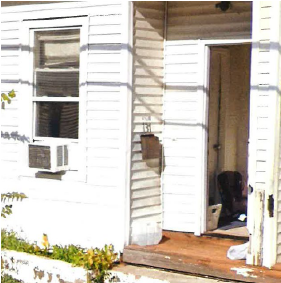
A search warrant application that was notarized with an expired notary stamp was not a Fourth Amendment violation. McAlister v. Kansas, 2026 U.S. Dist. LEXIS 55139 (D. Kan. Mar. 17, 2026).
2255 petitioner’s ineffective assistance of counsel claim for not moving to suppress is foreclosed by the Fourth Circuit’s addressing the merits of the search issue on appeal by plain error review as law of the case. Ojedokun v. United States, 2026 U.S. Dist. LEXIS 54770 (D. Md. Mar. 17, 2026).
Defendant had a meritorious motion to suppress his cell phone which all happened after Riley, but it wasn’t pursued. New trial ordered with evidence suppressed. Commonwealth v. Hunter, 2026 PA Super 48 (Mar. 17, 2026).*
The search warrant here for child pornography was particular and the time limit didn’t really matter for staleness. In any event, the good faith exception applies. United States v. Johnson, 2026 U.S. Dist. LEXIS 54830 (N.D.N.Y. Mar. 17, 2026).*
During the George Floyd riots, the day after a Minneapolis’s third police precinct was burned down, there was another protest around the fifth precinct in violation of a city-wide curfew. Plaintiff was shot in the head with a nonlethal projectile in a group of protestors. It was not unreasonable force under the circumstances. Bartz v. City of Minneapolis, 2026 U.S. App. LEXIS 7905 (8th Cir. Mar. 18, 2026):
After arrest of driver, the protective sweep of the car left to passenger who owned it, was insured, and had a DL was unreasonable. It was done just because of her romantic relationship with the arrestee. United States v. Williams, 2026 U.S. App. LEXIS 7751 (10th Cir. Mar. 17, 2026):
“On a cold, late December morning, New York State Department of Corrections and Community Supervision parole officers were attempting to locate a parole absconder for whom they had an arrest warrant.” People v. Jones, 236 A.D.3d 1410, 229 N.Y.S.3d 287 (4th Dept. 2025) (dissenting opinion). For descriptors they had height and weight and a potential location. Near that location came defendant, not the absconder, wearing a ski mask on a cold day, and he fled when the POs came after him. In flight, he tossed a gun and some drugs. There was no reasonable suspicion for them to pursue and detain him. People v. Jones, 2026 NY Slip Op 01447, 2026 N.Y. LEXIS 320 (Mar. 17, 2026) (5-2):
Defendant’s violating a “no firearms” prohibition at a retail establishment was reasonable suspicion for his stop for trespassing. United States v. Sinkfield, 2026 U.S. Dist. LEXIS 54823 (N.D. Ohio Mar. 17, 2026).
To succeed on an ineffective assistance of counsel claim, the underlying Fourth Amendment claim must be meritorious, and this one is barred by law of the case. United States v. Munoz, 2026 U.S. Dist. LEXIS 54819 (C.D. Cal. Mar. 9, 2026).*
There was reasonable suspicion for defendant’s stop and the bodycam video is not suppressed. United States v. Garcia, 2026 U.S. App. LEXIS 7649 (5th Cir. Mar. 16, 2026).*
Text messages and surveillance provided probable cause for this warrant. United States v. Jackson, 2026 U.S. App. LEXIS 7671 (6th Cir. Mar. 16, 2026).*
In a discovery fee sanctions case in a First Amendment case, the USMJ notes that $395-450 per hour was reasonable, noting that seven months ago the court approved $800 in a First and Fourth Amendment case. Goldberg v. Teachbk, Inc., 2026 U.S. Dist. LEXIS 54483 (N.D. Cal. Mar. 16, 2026)* (“In the Northern District, attorneys with roughly ten years of experience litigating civil cases are routinely awarded over Mr. Slater’s requested rates. See, e.g., Johnson v. City of San Jose, No. 21-cv-01849-, 2025 WL 2374004, at *22 (N.D. Cal. Aug. 15, 2025) (in First and Fourth Amendment case, finding rate of $800 per hour for partner with over eight years of experience reasonable); Hum. Rts. Def. Ctr. v. Cnty. of Napa, No. 20-cv-01296, 2021 WL 1176640, at *12 (N.D. Cal. Mar. 28, 2021) (in civil rights case, finding rate of $625 per hour for senior counsel with approximately eleven years of experience reasonable).”).
Firing pepperballs as nonlethal force was reasonable under the circumstances, here dispersing protestors attempting to climb over a security fence after refusing to disperse. Plaintiff’s analogous cases involved live ammunition. Hollamon v. Pennington Cty., 2026 U.S. App. LEXIS 7692 (8th Cir. Mar. 17, 2026).*
Posted in§ 1983 / Bivens, Excessive force|Comments Off on N.D.Cal.: Recognizes $800 per hour for 10-year lawyer in civil rights case
Defendant didn’t show standing in his affidavit offer of proof to pursue his motion to suppress. It wasn’t his place and he had limited use of it but doesn’t say who gave access. United States v. Caesar, 2026 U.S. App. LEXIS 7746 (2d Cir. Mar. 17, 2026)*:
In an anticipatory warrant case, the officer did all he could to determine whether the premises was a single unit or not, and everything suggested it was single. “[T]he agents’ investigation of the facts contained in the warrant, and their execution of it, were reasonable. And even if we doubted the warrant or agents’ execution of it, long-recognized exceptions to the warrant requirement apply here, as discussed below.” United States v. Suggs, 2026 U.S. App. LEXIS 7741 (7th Cir. Mar. 17, 2026):
Posted inParticularity, Reasonableness|Comments Off on CA7: Officer did all he could to determine whether place to be searched was single unit or multi-unit
Officers got a warrant for a cell site simulator to look for defendant’s phone fearing he was leaving the country by air from JFK to Europe to evade arrest, but they didn’t use it. Also, the flight he was scheduled on was 2¼ days away (per HSI), and the crime was five months ago. They got exigency based pings and finally located him. The trial court denied the motion to suppress. True exigency was lacking; they had plenty of time to get a warrant. The state also argued inevitable discovery as an alternative but the trial court didn’t rule on that. Remanded to take that up. State v. Clegg, 2026 N.H. 11 (Mar. 17, 2026).
Inventory just barely wasn’t pretextual: “The Government narrowly met that burden in this case only because the Court found no evidence that Officer Hanson’s reliance on the inventory search exception was pretextual.” United States v. Lewis, 2026 U.S. Dist. LEXIS 53282 (D. Minn. Mar. 16, 2026).*
It’s not ineffective assistance of counsel to fail to seek suppression on meritless grounds. Here, the entry was by consent from the victim. Acy v. United States, 2026 U.S. Dist. LEXIS 53395 (N.D. Tex. Mar. 16, 2026).*
A warrant to ping a cell phone in the DC Metro area which is three jurisdictions (DC, MD, VA) to find defendant to arrest him was with probable cause and good faith despite an alleged violation of Rule 41(b).“Rule 41(b) generally allows a judge ‘with authority in the district … to issue a warrant to search for and seize a person or property located within the district.’” Also, alleged violation of Rule 41(b) doesn’t merit suppression here, as eleven other circuits have ruled. United States v. Thorne, 169 F.4th 1117 (D.C. Cir. Mar. 17, 2026):
Posted inF.R.Crim.P. 41, Good faith exception|Comments Off on DC: Alleged violation of Rule 41(b) for “property located within the district” not subject to exclusionary rule when property is moving
As a social guest occasionally spending the night, defendant had standing and a reasonable expectation of privacy in the house and curtilage when he was there. Not, however, in the property’s open fields. State v. Mabe, 2026 Tenn. Crim. App. LEXIS 133 (Mar. 16, 2026).
Where plaintiff’s Fourth Amendment claim fails, his Fifth Amendment takings claim does, too. Fitzpatrick v. City of L.A., 2026 U.S. App. LEXIS 7609 (9th Cir. Mar. 16, 2026).*
“There is no reasonable expectation of privacy in the business records of third parties exposed to employees in the ordinary course of business.” Shorstein v. Hardwick, 2026 U.S. Dist. LEXIS 53091 (M.D. Fla. Feb. 9, 2026).*
The reasonable belief that others were present on execution of a warrant justified a full protective sweep. State v. Fields, 2026-Ohio-867 (7th Dist. Mar. 13, 2026).*
An ALPR told officers that the owner had a suspended DL, and that justified the stop. The passenger had an arrest warrant on him. The vehicle was impounded. Behind an unsecured panel, a digital safe was found, and it was impounded and opened with a warrant for inventory. This was valid. People v. Carthen, 2026 NY Slip Op 50302(U) (Tompkins Co. Mar. 9, 2026).
The justification for a stop doesn’t have to be shown on a dashcam. [After all, what did we do before them?] “In this case, the State presented one witness with no supporting video evidence to corroborate his testimony at a suppression hearing. Where a single witness, if believed, can sustain a criminal conviction, then a single witness, if believed, can establish a lawful basis to conduct a traffic stop, perform a probable cause search, and effect an arrest under the Fourth Amendment. Detective Swindell also explained that his dash camera would not have captured these violations because of the orientation of his cruiser. The lack of video evidence to support his testimony does not render the stop constitutionally unsound.” The court credited the officer. State v. Vance, 2026-Ohio-876 (11th Dist. Mar. 11, 2026).*
Fleeing from his vehicle with cell phone inside was abandonment. United States v. Peterson, 2026 U.S. App. LEXIS 7569 (6th Cir. Mar. 13, 2026).*
The dog sniff occurred before the Rodriguez moment and was thus reasonable. State v. Cooper, 2026 ND 68, 2026 N.D. LEXIS 99 (Mar. 12, 2026)
On the totality of circumstances, there was reasonable suspicion as to defendant as the subject of a controlled buy. United States v. Kilgore, 2026 U.S. App. LEXIS 7572 (6th Cir. Mar. 12, 2026).*
The DNA test of the child of the decedent to determine paternity was by consent. In re Est. of Kapileo, 2026 N. Mar. I. LEXIS 2 (Mar. 13, 2026).*
“Here, the affidavit in support of the search warrant for Burrus’s phone records is a far cry from a bare bones affidavit.” Therefore, there was probable cause and the good faith exception at least applies. United States v. Burrus, 2026 U.S. App. LEXIS 7576 (6th Cir. Mar. 12, 2026).*
Standing to challenge a grand jury subpoena is like Fourth Amendment standing. It’s not jurisdictional, and it can be waived. “The Supreme Court has made clear that Fourth Amendment standing ‘is not a jurisdictional question’ but instead part ‘of the merits of a Fourth Amendment claim.’ Byrd v. United States, 584 U.S. 395, 410-11, 138 S. Ct. 1518, 200 L. Ed. 2d 805 (2018). By the same logic, a challenge to a party’s standing to quash must also be a merits argument. If it is, then it can be waived. ….” The government doesn’t challenge standing for subpoenas for Federal Reserve records. (And they are quashed as pretextual.) In re Grand Jury Subpoenas Nos. [redacted], 2026 U.S. Dist. LEXIS 52927 (D.D.C. Mar. 11, 2026).
Defendant was thought to be the driver of a Ford pickup truck from California in Puerto Rico, but he disavowed responsibility saying he didn’t have the keys. A gun had been seen inside it in plain view. A search of the truck revealed things of his connecting him to it. He doesn’t have standing. There was also a Franks challenge which is decided on the merits: “A statement that Delgado read the motion is not even an allegation that the agent’s affidavit contains a material omission. And, even if the Court considers the facts in the referenced motion, Delgado did not make a substantial preliminary showing of a material omission. He does not include statements from the other witnesses, nor does he include a copy of the affidavit submitted by law enforcement, without which it is difficult if not impossible to assess whether a material omission was made.” United States v. Delgado-López, 2026 U.S. Dist. LEXIS 52886 (D.P.R. Mar. 12, 2026).*
Conflict of laws: Indiana’s Pirtle rule that consent searches afford a right to consult with counsel doesn’t apply to police in another state that encounter defendant and get consent to search. Mendenhall v. State, 2026 Ind. App. LEXIS 81 (Mar. 12, 2026).
Defendant badly wrecked his car fleeing from the police. Six months later, defense counsel told the FBI that defendant didn’t want it, so the FBI searched it finding his cell phone. That showed he had no reasonable expectation of privacy in it and the contents. United States v. Peterson, 2026 U.S. App. LEXIS 7569 (6th Cir. Mar. 13, 2026).*
2254 petitioner claimed he satisfied the Stone exception for “sham legal process” recognized by the Sixth Circuit, but he shows nothing to support it. McGee v. Warden, Belmont Corr. Inst., 2026 U.S. Dist. LEXIS 52413 (S.D. Ohio Mar. 13, 2026).*
Defendant’s drug history was essentially enough to show nexus to a cell phone. State v. White, 2026 Tenn. Crim. App. LEXIS 131 (Mar. 13, 2026).
A civil standby with a police officer for an apartment inspection didn’t violate the Fourth Amendment. Rockette v. Carpenter Mgmt. Co., 2026 U.S. Dist. LEXIS 52879 (N.D. Miss. Mar. 13, 2026).*
The vehicle in this case was towed when it was seized, and the towing company owner ultimately acquired title to it. Then, he searched it, and that was a private search when he found a gun and ammunition. United States v. Wilkinson, 2026 U.S. Dist. LEXIS 52841 (D. Minn. Jan. 16, 2026).*
Pro se plaintiff gets jury trial verdict for $550,000 for illegal search and malicious prosecution thereafter. The jury was free to conclude that the basis for the search was invented. Coleman v. Sperry, 2026 U.S. Dist. LEXIS 52527 (W.D. Wis. Mar. 12, 2026).*
“Nelson’s second ground for relief is a blanket statement that his constitutional rights under the First, Fourth, Fifth, Sixth, and Eighth Amendments were violated. Nelson fails to explain how. Nelson states the following: ‘Mr. Nelson’s conviction and sentence are violative of his right to freedom of speech and to petition, his right to be free of unreasonable search and seizure, his right to due process of law, his right to counsel, to confrontation of witness, to present a defense, and to compulsory process, and his right to be free of cruel and unusual punishment under the constitution.’ Doc. 1. Nelson states conclusions unsupported by a single fact.” Defaulted, too. Nelson v. United States, 2026 U.S. Dist. LEXIS 52371 (E.D. Mo. Mar. 13, 2026).*
In a § 1983 case, the warrant wasn’t in the pleadings until the reply. “Defendants’ attachment of the warrant to the reply does not transform the motion into one for summary judgment, nor does it create unfair surprise. [¶] In any event, even when material outside of the pleadings is submitted, the appropriate course is not to strike the filing, but for the Court to determine whether to consider the material in resolving the motion. The Court is fully capable of disregarding any argument or exhibit that exceeds the permissible scope of Rule 12(c) review. Plaintiffs have not demonstrated that the inclusion of the exhibit has prejudiced their ability to respond to the dispositive motions.” Simmons v. City of Hurricane, 2026 U.S. Dist. LEXIS 52472 (S.D. W. Va. Mar. 13, 2026).*
Posted in§ 1983 / Bivens, Burden of pleading|Comments Off on W.D.Wis.: Pro se ptf gets jury trial verdict for $550,000 for illegal search and malicious prosecution
The court concludes that plaintiff’s apartment’s breezeway is curtilage, but the officers get qualified immunity because there’s no case on point. They remained there after being told to leave. Sabey v. Butterfield, 2026 U.S. Dist. LEXIS 52309 (D. Mass. Mar. 13, 2026):
“In his objections, Marshall adds other points to his substantial showing argument. First he argues recklessness can be inferred from the fact the agent made the same mistake twice: in the warrant affidavit and when interviewing Marshall ‘to convince him to confess.’ … The Court does not agree. She obtained the warrant the day before arresting and interviewing Marshall. That she had the same misinformation in her head two days in a row does not suggest intentionality or recklessness on either occasion. Perhaps Marshall’s argument makes more sense if one believes she was trying to convince him to confess by misleading him. But, as stated above, the audio tape of that interaction does not support his allegation. Special Agent Dervish was not hostile or disrespectful to Marshall, overly aggressive in challenging his statement, or feeding him false information throughout the interview. Her demeanor in the interview—calm and professional— supports the Court’s conclusion that no evidence suggests she intentionally or recklessly misrepresented the IP address.” United States v. Marshall, 2026 U.S. Dist. LEXIS 51939 (N.D. Ga. Mar. 13, 2026).
Wisconsin DOC violates those on extended supervision on GPS monitoring when the signal stops without even inquiring whether there was equipment failure or other benign cause. The court certifies the proposed class. Robillard v. Knutson, 2026 U.S. Dist. LEXIS 52203 (E.D. Wis. Mar. 13, 2026).*
Posted inFranks doctrine, Probation / Parole search|Comments Off on N.D.Ga.: A Franks violation isn’t shown to be reckless just because a factual mistake was repeated
AUSA in an immigration detention case was directed to respond to the detainee’s Fourth Amendment claim and completely failed, only repeating the government’s theory of the case. Petitioner was finally released. The AUSA doesn’t get sanctioned, but the court is troubled by the dissembling. Torre v. Lyons, DJC-CSK, 2026 U.S. Dist. LEXIS 51525 (E.D. Cal. Mar. 12, 2026)*:
Posted inImmigration arrests|Comments Off on E.D.Cal.: AUSA avoids sanction for refusing to answer court’s 4A question in ICE case; the petitioner had already been released
"If it was easy, everybody would be doing it. It isn't, and they don't." —Me
"Life is not a matter of holding good cards, but of playing a poor hand well." –Josh Billings (pseudonym of Henry Wheeler Shaw), Josh Billings on Ice, and Other Things (1868) (erroneously attributed to Robert Louis Stevenson, among others)
“I am still learning.” —Domenico Giuntalodi (but misattributed to Michelangelo Buonarroti (common phrase throughout 1500's)).
"Love work; hate mastery over others; and avoid intimacy with the government."
—Shemaya, in the Thalmud
"It is a pleasant world we live in, sir, a very pleasant world. There are bad people in it, Mr. Richard, but if there were no bad people, there would be no good lawyers."
—Charles Dickens, “The Old Curiosity Shop ... With a Frontispiece. From a Painting by Geo. Cattermole, Etc.” 255 (1848)
"A system of law that not only makes certain conduct criminal, but also lays down rules for the conduct of the authorities, often becomes complex in its application to individual cases, and will from time to time produce imperfect results, especially if one's attention is confined to the particular case at bar. Some criminals do go free because of the necessity of keeping government and its servants in their place. That is one of the costs of having and enforcing a Bill of Rights. This country is built on the assumption that the cost is worth paying, and that in the long run we are all both freer and safer if the Constitution is strictly enforced." —Williams v. Nix, 700 F. 2d 1164, 1173 (8th Cir. 1983) (Richard Sheppard Arnold, J.), rev'd Nix v. Williams, 467 US. 431 (1984).
"The criminal goes free, if he must, but it is the law that sets him free. Nothing can destroy a government more quickly than its failure to observe its own laws, or worse, its disregard of the charter of its own existence." —Mapp v. Ohio, 367 U.S. 643, 659 (1961).
"Any costs the exclusionary rule are costs imposed directly by the Fourth Amendment."
—Yale Kamisar, 86 Mich.L.Rev. 1, 36 n. 151 (1987).
"There have been powerful hydraulic pressures throughout our history that bear heavily on the Court to water down constitutional guarantees and give the police the upper hand. That hydraulic pressure has probably never been greater than it is today." — Terry v. Ohio, 392 U.S. 1, 39 (1968) (Douglas, J., dissenting).
"The great end, for which men entered into society, was to secure their property." —Entick v. Carrington, 19 How.St.Tr. 1029, 1066, 95 Eng. Rep. 807 (C.P. 1765)
"It is a fair summary of history to say that the safeguards of liberty have frequently been forged in controversies involving not very nice people. And so, while we are concerned here with a shabby defrauder, we must deal with his case in the context of what are really the great themes expressed by the Fourth Amendment." —United States v. Rabinowitz, 339 U.S. 56, 69 (1950) (Frankfurter, J., dissenting)
"The course of true law pertaining to searches and seizures, as enunciated here, has not–to put it mildly–run smooth." —Chapman v. United States, 365 U.S. 610, 618 (1961) (Frankfurter, J., concurring).
"A search is a search, even if it happens to disclose nothing but the bottom of a turntable." —Arizona v. Hicks, 480 U.S. 321, 325 (1987)
"For the Fourth Amendment protects people, not places. What a person knowingly exposes to the public, even in his own home or office, is not a subject of Fourth Amendment protection. ... But what he seeks to preserve as private, even in an area accessible to the public, may be constitutionally protected." —Katz v. United States, 389 U.S. 347, 351 (1967)
“Experience should teach us to be most on guard to protect liberty when the Government’s purposes are beneficent. Men born to freedom are naturally alert to repel invasion of their liberty by evil-minded rulers. The greatest dangers to liberty lurk in insidious encroachment by men of zeal, well-meaning but without understanding.” —United States v. Olmstead, 277 U.S. 438, 479 (1925) (Brandeis, J., dissenting)
“Liberty—the freedom from unwarranted intrusion by government—is as easily lost through insistent nibbles by government officials who seek to do their jobs too well as by those whose purpose it is to oppress; the piranha can be as deadly as the shark.” —United States v. $124,570, 873 F.2d 1240, 1246 (9th Cir. 1989)
"You can't always get what you want / But if you try sometimes / You just might find / You get what you need." —Mick Jagger & Keith Richards, Let it Bleed (album, 1969)
"In Germany, they first came for the communists, and I didn't speak up because I wasn't a communist. Then they came for the Jews, and I didn't speak up because I wasn't a Jew. Then they came for the trade unionists, and I didn't speak up because I wasn't a trade unionist. Then they came for the Catholics and I didn't speak up because I wasn't a Catholic. Then they came for me–and by that time there was nobody left to speak up."
—Martin Niemöller (1945) [he served seven years in a concentration camp]
“Children grow up thinking the adult world is ordered, rational, fit for purpose. It’s crap. Becoming a man is realising that it’s all rotten. Realising how to celebrate that rottenness, that’s freedom.” – John le Carré, The Night Manager (1993), line by Richard Roper
"The point of the Fourth Amendment, which often is not grasped by zealous officers, is not that it denies law enforcement the support of the usual inferences which reasonable men draw from evidence. Its protection consists in requiring that those inferences be drawn by a neutral and detached magistrate instead of being judged by the officer engaged in the often competitive enterprise of ferreting out crime." —Johnson v. United States, 333 U.S. 10, 13-14 (1948)
The book was dedicated in the first (1982) and sixth (2025) editions to Justin William Hall (1975-2025). He was three when this project started in 1978.