Reason: New Cert Petition on Emergency Entry: What Was the Common Law Rule?

Reason: New Cert Petition on Emergency Entry: What Was the Common Law Rule? A few thoughts on a pending cert petition. by Orin S. Kerr:

Continue reading →
Posted in SCOTUS | Comments Off on Reason: New Cert Petition on Emergency Entry: What Was the Common Law Rule?

D.Mass.: 17-day delay between seizure and SW was reasonable

“[T]he government’s seventeen-day delay between the warrantless seizure of Thompson’s property and the issuance of the search warrants was reasonable. The first factor favors the government because seventeen days—eleven of which were business days—is relatively short and far shorter than other instances in which courts have deemed a delay in securing a warrant reasonable.” United States v. Thompson, 2024 U.S. Dist. LEXIS 228675 (D. Mass. Dec. 18, 2024).

Driving several seconds on the fog line was reasonable suspicion for a stop. United States v. Garcia, 2024 U.S. Dist. LEXIS 229432 (N.D. Okla. Dec. 19, 2024).*

“Assuming, arguendo, that Defendant has standing to raise the concerns here at issue, the affidavits set forth ample indicia of probable cause; are sufficiently particular as to the items to be searched; demonstrate the required ‘probable cause nexus,’ … and are neither vague nor conclusory. … (‘probable cause is not a “high bar”’). Contrary to the suggestion of Defendant’s counsel, these are not ‘bare bones’ warrants that might merit striking. … Moreover, even if the Court were to now find the warrants lacking—which it does not—the officers relied in good faith on the two search warrants at issue and the good faith exception would apply.” United States v. Holmes, 2024 U.S. Dist. LEXIS 229724 (S.D. Ohio Dec. 19, 2024).*

Posted in Computer and cloud searches, Good faith exception, Reasonable suspicion, Reasonableness, Warrant execution | Comments Off on D.Mass.: 17-day delay between seizure and SW was reasonable

IA: No REP in ER room from police entry for observations and questions

Defendant had no reasonable expectation of privacy in the ER room he was being treated in when the officer entered, observed him clearly intoxicated, and then elicited admissions from him. (The court considered both trespass and reasonable expectation of privacy theories and goes with the latter.) State v. Miller, 2024 Iowa App. LEXIS 892 (Dec. 18, 2024).

2255 successor petition, relying on Mapp v. Ohio as a “new constitutional rule” is rejected. Mapp was decided in 1961 and isn’t new. In re Moore, 2024 U.S. App. LEXIS 32062 (11th Cir. Dec. 17, 2024).* [They really have to say that.]

Defendant’s letting in the CI in for a drug deal was not an illegal search. That’s pure consent. (But the court goes one step further, unnecessarily, to find attenuation because it took ten minutes before the drug deal happened.) United States v. Corder, 2024 U.S. App. LEXIS 32101 (7th Cir. Dec. 18, 2024).* [Don’t rely on this case for attenuation; seems like an outlier to me.]

Posted in Consent, Issue preclusion, Reasonable expectation of privacy | Comments Off on IA: No REP in ER room from police entry for observations and questions

NC: Knock-and-talk led to smell of MJ and attempt to bar the door, and that was exigency

The officer came to defendant’s door for a knock-and-talk about marijuana sales, and, when the door was opened, he could smell marijuana. Defendant shut the door and attempted to put a bar up to block access, and that was all exigency. State v. Reel, 2024 N.C. App. LEXIS 1011 (Dec. 17, 2024).

Smell of marijuana coming from car justified search of two backpacks found inside under the automobile exception. State v. Torregano, 2024 La. App. LEXIS 2216 (La. App. 4 Cir Dec. 17, 2024).*

2255 petition’s ineffective assistance of counsel claim fails on merits of search. The protective sweep here was justified by a fear of an active shooter. Williams v. United States, 2024 U.S. Dist. LEXIS 228392 (M.D. Fla. Dec. 17, 2024).* [Not even close, here.]

Posted in Automobile exception, Emergency / exigency, Knock and talk, Plain view, feel, smell, Protective sweep | Comments Off on NC: Knock-and-talk led to smell of MJ and attempt to bar the door, and that was exigency

CA6: 4A’s “reasonable officer” “is a hypothetical construct of the law, one that no district court can cross-examine”

“But the Fourth Amendment’s ‘reasonable officer’ is not a real officer with real subjective thoughts and feelings. It is a hypothetical construct of the law, one that no district court can cross-examine.” United States v. Urraca, 2024 U.S. App. LEXIS 32095 (6th Cir. Dec. 18, 2024):

Continue reading →
Posted in Pretext, Reasonableness | Comments Off on CA6: 4A’s “reasonable officer” “is a hypothetical construct of the law, one that no district court can cross-examine”

MT: Search of electronics under SW needs to start by SW expiration, not be completed

The search warrant for numerous electronic devices (phones and tablets) was served within ten days but the search couldn’t be completed for longer than that. The grant of the motion to suppress because of the delay is reversed. The warrant was not stale (time limited) when served. The search needs to start before the expiration date on the warrant under state law. State v. Bao, 2024 MT 308 (Dec. 17, 2024).

A panel of the Ninth Circuit splits on qualified immunity in an excessive force case. The dissent argues that the minimal force applied by some of the officers was still reasonable and they didn’t have to second guess what started the fray. Pachote v. Nelson, 2024 U.S. App. LEXIS 32070 (9th Cir. Dec. 18, 2024).*

The frisk of defendant’s sweatshirt was based on reasonable suspicion when he refused to get out of the car and reached toward the sweatshirt pocket. United States v. Teter, 2024 U.S. App. LEXIS 32074 (3d Cir. Dec. 18, 2024).*

Posted in Computer and cloud searches, Excessive force, Reasonable suspicion, Warrant execution | Comments Off on MT: Search of electronics under SW needs to start by SW expiration, not be completed

CA6: 4A IAC claim requires a showing petitioner would win on the merits of search claim

“And if Derringer intended to argue that counsel should have moved to suppress the cell phone videos, he did not identify any basis for challenging the validity of the search warrant that resulted in the seizure of the cell phone or for suppressing the phone or its contents.” Derringer v. United States, 2024 U.S. App. LEXIS 32024 (6th Cir. Dec. 16, 2024).

Plaintiffs’ Fourth Amendment excessive force class action claim fails. “There was no ‘seizure’ of the class members within the meaning of the Fourth Amendment because the record showed that defendants’ use of airborne and auditory irritants was not objectively aimed at restraining the class members, even temporarily.” Some individual claims fail on qualified immunity. Puente v. City of Pheonix, 2024 U.S. App. LEXIS 32202 (9th Cir. Dec. 19, 2024).*

There was no reasonable expectation of privacy in suitcases apparently removed from a car that fled police and ended up on the back porch of a house. No one claimed the suitcases to have a privacy claim in them. United States v. Lane, 2024 U.S. Dist. LEXIS 227893 (D.S.C. Dec. 17, 2024).*

Posted in Burden of pleading, Curtilage, Ineffective assistance, Qualified immunity, Reasonable expectation of privacy | Comments Off on CA6: 4A IAC claim requires a showing petitioner would win on the merits of search claim

CA2: Plain view seizure of cell phone established by officers’ knowledge of role of cell phones in crime

The evidentiary value of a cell phone for plain view was established here because, when officers saw the phone, they’d been investigating a conspiracy involving cell phone for months. United States v. Kurland, 2024 U.S. App. LEXIS 32177 (2d Cir. Dec. 19, 2024).

Police at a Wawa saw defendant engage in what appeared to be a hand-to-hand drug transaction. He was on probation, and this gave reasonable suspicion for his stop. He admitted to having a firearm in his bag, but there were no drugs. Register v. State, No. 396, 2023, 2024 Del. LEXIS 421 (Dec. 19, 2024).*

Apparently following the client’s dictates about how to argue the ineffective assistance of counsel on appeal, the claim is dismiss for lack of a cogent argument developing the point. It’s just a cut and paste from the PCR hearing transcript and makes no effort to elaborate. “Finally, Rule 84.04(e) requires, ‘The argument shall substantially follow the order of “Points Relied On.”’ This Court has interpreted that to mean that an argument section ‘should develop the claim of error by showing the interaction between the relevant principles of law and the facts of the particular case.’ … Movant’s argument section does not develop his claim of error. As mentioned, Movant’s argument is a nearly verbatim block quotation of the post-conviction hearing transcript.” Schierbaum v. State, 2024 Mo. App. LEXIS 908 (Dec. 17, 2024).*

Posted in Burden of pleading, Plain view, feel, smell, Reasonable suspicion | Comments Off on CA2: Plain view seizure of cell phone established by officers’ knowledge of role of cell phones in crime

IL: Investigative alert based on an underlying finding of PC satisfies 4A

A Chicago PD investigative alert based on an underlying finding of probable cause satisfies the Fourth Amendment and the state constitution. Prior case law is overruled. People v. Clark, 2024 IL 127838, 2024 Ill. LEXIS 836 (Dec. 19, 2024):

Continue reading →
Posted in Probable cause, Seizure | Comments Off on IL: Investigative alert based on an underlying finding of PC satisfies 4A

MT: Cell phone probation search condition based on generalizations of cell phones and crime was unreasonable

This cell phone probation search condition based on generalizations of cell phones and crime was unreasonable. State v. LeDeau, 2024 MT 305 (Dec. 17, 2024).

Plaintiff makes numerous claims against a city short term rental ordinance, including a Fourth Amendment claim. As to this claim, it is speculative and it is dismissed for lack of Art. III standing. Hause v. City of Fayetteville, 2024 U.S. Dist. LEXIS 229421 (W.D. Ark. Dec. 19, 2024).*

Defendant was convicted of child endangerment of his own children. Police were called to his house by a neighbor concerned about the welfare of the children. A naked and obviously dirty child appeared alone at a window, and they entered to check on the child. The emergency exception applied. United States v. Myers, 2024 CCA LEXIS 535 (Army Ct. Crim. App. Dec. 16, 2024).*

Posted in Cell phones, Emergency / exigency, Probation / Parole search, Standing | Comments Off on MT: Cell phone probation search condition based on generalizations of cell phones and crime was unreasonable

The Marshall Project: How a 1963 Cleveland Case Shaped Stop-and-Frisk Police Tactics, and Why It Still Matters

The Marshall Project: How a 1963 Cleveland Case Shaped Stop-and-Frisk Police Tactics, and Why It Still Matters by Brittany Hailer and Rachel Dissell, data analysis by Doug Livingston. In § 21.04 of the Treatise there’s a discussion of the history of Terry and the actual stop in Cleveland. It all happened October 31, 1963 and the motion to suppress was denied September 22, 1964.

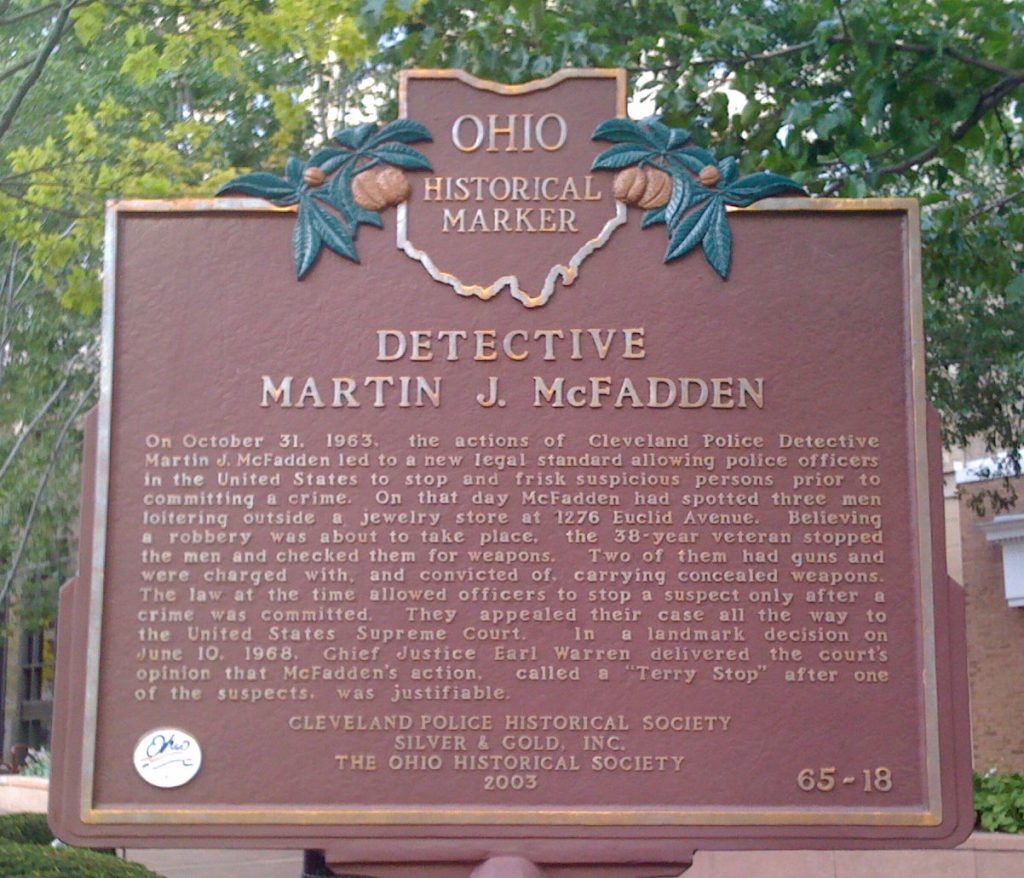
When I did a CLE in Cleveland about 20 years ago, the Federal Defender took me to the scene of the search and arrest. There’s an historical plaque across the street from the store where officer McFaddin was standing, watching John Terry, Richard Chilton, and Carl Katz apparently casing the jewelry store for a daytime heist. It’s important local history:

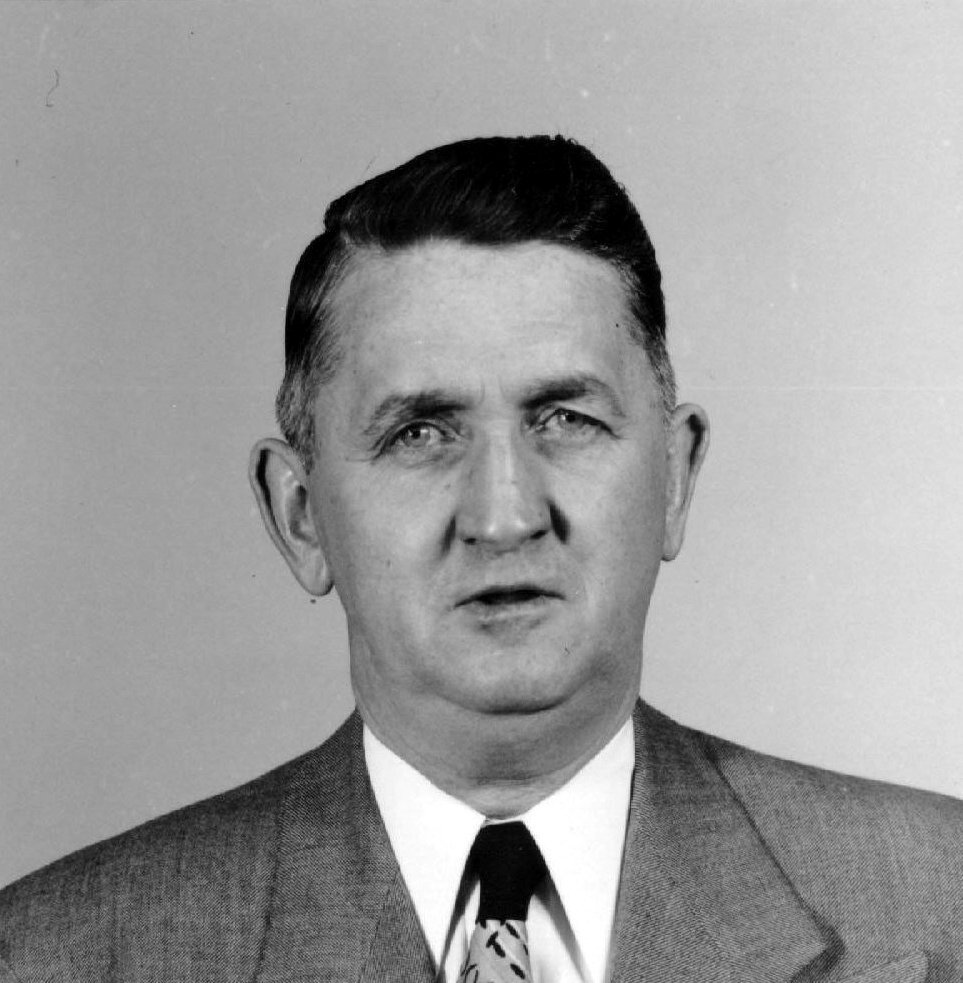
There’s one online. And here’s Officer McFaddin’s official CPD photo.

As Terry notes, he was an officer for 39 years, a detective for 35.

Posted in Uncategorized | Comments Off on The Marshall Project: How a 1963 Cleveland Case Shaped Stop-and-Frisk Police Tactics, and Why It Still Matters

D.S.C.: No standing in suitcase on def’s back porch he wouldn’t claim

Defendant didn’t have standing to challenge the search of a suitcase on the back porch of his house that he didn’t claim ownership of. United States v. Lane, 2024 U.S. Dist. LEXIS 227893 (D.S.C. Dec. 17, 2024).*

Plaintiff’s Fourth Amendment claim in his complaint that the warrant wasn’t constitutionally compliant tells the court nothing. Dismissed. Weinapple v. Bonta, 2024 U.S. Dist. LEXIS 227006 (E.D. Cal. Dec. 16, 2024).*

No successor petition for a Fourth Amendment or ineffective assistance of counsel claim on it. In re Farmer, 2024 U.S. App. LEXIS 31976 (6th Cir. Dec. 16, 2024).*

Appellant’s 2254 Fourth Amendment claim is barred by Stone. Knauss v. Rewerts, 2024 U.S. App. LEXIS 31973 (6th Cir. Dec. 16, 2024).*

Posted in Burden of pleading, Issue preclusion, Standing | Comments Off on D.S.C.: No standing in suitcase on def’s back porch he wouldn’t claim

N.D.Iowa: Govt’s exigency claim to enter defendant’s garage is rejected

“To the extent defendants assert that the warrantless entry was necessary to continue a purported temporary detention of Wheelock to further their investigation, that is not a recognized exigency or exception to justify a warrantless entry into a home or its curtilage. Indeed, the Supreme Court has examined an investigation under similar circumstances and found no justification for a warrantless home entry. In Welsh, a witness observed a car changing speeds and veering from side to side before swerving off the road and coming to a stop in an open field. Welsh v. Wisconsin, 466 U.S. 740, 742, 104 S. Ct. 2091, 80 L. Ed. 2d 732 (1984).” Wheelock v. Nitzschke, 2024 U.S. Dist. LEXIS 227745 (N.D. Iowa Dec. 17, 2024).

“When arresting the fleeing Ms. Dunbar at the threshold of a known drug house, law enforcement observed individuals inside through the glass storm door. The known presence of these individuals, along with the preceding facts, gives rise to a reasonable belief that dangerous individuals may lurk within. See, e.g., Jones, 667 F.3d at 485 (upholding a protective sweep given the ‘presence of … seven vehicles [parked on the premises] coupled with … prior surveillance of known meth users patronizing the … residence’) …” United States v. Bradley, 2024 U.S. Dist. LEXIS 227063 (S.D. W.Va. Dec. 16, 2024).*

Defendant was a passenger in a car, and officers had a warrant for his arrest. He didn’t have standing to challenge search of the car, but he did have standing to challenge the stop. And it was reasonable, then a search warrant was issued for the vehicle on probable cause. United States v. McDowell, 2024 U.S. Dist. LEXIS 227744 (N.D. Iowa Dec. 17, 2024).*

Posted in Curtilage, Emergency / exigency, Protective sweep, Standing | Comments Off on N.D.Iowa: Govt’s exigency claim to enter defendant’s garage is rejected

OH10: Foundation for Facebook exhibits provided by seizing officer

The evidentiary foundation for Facebook messages under rule 901 was established by the officer obtaining the Facebook warrant. State v. Lathon, 2024-Ohio-5886, 2024 Ohio App. LEXIS 4539 (10th Dist. Dec. 18, 2024).

Officers had neither probable cause nor reasonable suspicion to stop and detain defendant. His actions were collectively maybe just a little suspicious, but nothing was approaching criminal. United States v. Travis, 2024 U.S. Dist. LEXIS 226794 (D.N.J. Dec. 16, 2024).*

On remand from a reversal of Fourth Amendment claim, the court exercises supplemental jurisdiction over plaintiff’s state law claims including an assault during the search. McSean v. Chamberlain, 2024 U.S. Dist. LEXIS 226899 (E.D. Mo. Dec. 16, 2024).*

The fact the press showed up for a search wasn’t a grand jury leak in violation of Fed. R. Crim. P. 6. That was all independent. United States v. Combs, 2024 U.S. Dist. LEXIS 226859 (S.D.N.Y. Dec. 16, 2024).*

Posted in Admissibility of evidence, Reasonable suspicion, Warrant execution | Comments Off on OH10: Foundation for Facebook exhibits provided by seizing officer

OH10: Suicidal domestic call followed by ShotSpotter alert was RS

Police had a call about a domestic situation with a suicidal man with a gun. Shortly thereafter, there was a ShotSpotter alert of 20 gunshots from a house nearby. Officers arrived and patted down those found there. This is substantially factually similar to State v. Hairston, 2019-Ohio-1622, 156 Ohio St.3d 363, 126 N.E.3d 1132 (2019), permitting a frisk when police arrive because of objective belief in a firearm being involved. In re A.M.J., 2024-Ohio-5889 (10th Dist. Dec. 17, 2024).

A Fourth Amendment claim can’t be raised in a successor habeas. In re Foreman, 2024 U.S. App. LEXIS 31842 (5th Cir. Dec. 16, 2024).*

The good faith exception applied to the T-Mobile warrants. While the affiant officer didn’t read all the reports of the others involved, he talked with them, and knew about the investigation. It was objectively reasonable to believe there was probable cause. United States v. Henderson, 2024 U.S. Dist. LEXIS 226723 (D. Minn. Dec. 16, 2024).*

Failing to come to a full stop at a stop sign justified this stop. United States v. Rivera, 2024 U.S. Dist. LEXIS 226799 (D.N.J. Dec. 16, 2024).*

Posted in Cell phones, Emergency / exigency, Good faith exception, Issue preclusion, Reasonable suspicion | Comments Off on OH10: Suicidal domestic call followed by ShotSpotter alert was RS

CA5: A complete investigation before a SW application is sought isn’t required

A search warrant application isn’t defective because the officers didn’t do a more complete investigation. The constitution doesn’t require that. Miller v. Salvaggio, 2024 U.S. App. LEXIS 31833 (5th Cir. Dec. 16, 2024):

Continue reading →
Posted in Warrant requirement | Comments Off on CA5: A complete investigation before a SW application is sought isn’t required

DE: PO’s failure to comply with juvenile probation search regulations on parental involvement justified suppression

The state’s policy on parental involvement in juvenile probation searches wasn’t complied with, and the juvenile’s home search is suppressed. The state’s assertion of exigency is rejected. Sharp v. State, 2024 Del. LEXIS 412 (Dec. 16, 2024).

The court won’t apply the Fourth Amendment reasonable expectation of privacy standard to a civil email discovery dispute over attorney-client privilege. Flannery Assocs., LLC v. Barnes Family Ranch Assocs., LLC, 2024 U.S. Dist. LEXIS 226127 (E.D. Cal. Dec. 13, 2024).*

“The facts Officer Wanschura provided in the T-Mobile Tracking Warrant Affidavit were not lengthy, but the Court agrees with the magistrate judge that they supplied a sufficient basis ‘to give rise to the inference that Mr. Henderson was involved in the June 20 shooting’ and that ‘evidence of such criminal activity reasonably would be found’ in the T-Mobile data. (R&R at 12-14) (citing United States v. Brackett, 846 F.3d 987, 992 (8th Cir. 2017) (‘[A]n issuing judge may draw reasonable inferences from the totality of the circumstances in determining whether probable cause exists to issue a warrant.’). The Affidavit referred to the ongoing investigation into the June 20 shooting and cross-referenced information related to Mr. Henderson obtained from a Facebook warrant.” United States v. Henderson, 2024 U.S. Dist. LEXIS 226723 (D. Minn. Dec. 16, 2024).*

Posted in E-mail, Probable cause, Probation / Parole search | Comments Off on DE: PO’s failure to comply with juvenile probation search regulations on parental involvement justified suppression

OH3: Going right into pockets was an invalid frisk

The state failed to prove the necessity for a stop and frisk because the video shows the officer going right into defendant’s pockets and not frisking. State v. Barnes, 2024-Ohio-5865, 2024 Ohio App. LEXIS 4519 (3d Dist. Dec. 16, 2024).

The officer here had reasonable suspicion for stopping defendant. He was heard by a neighbor allegedly trying to kick a woman’s door in, and the neighbor called 911. When the officer got there, he blew her off as she tried to inquire into the call. Harrod v. Lee, 2024 U.S. App. LEXIS 31742 (6th Cir. Dec. 13, 2024).*

An anonymous tip that people in camouflage clothing came out of the bush and got in a car near the border was about enough for reasonable suspicion. United States v. Martin, 2024 U.S. Dist. LEXIS 225758 (D. Ariz. Dec. 13, 2024).*

The trial court erred in ordering return of a stolen car 20 years later without more proof of who the owner was. State v. Hadley, 2024 Ala. Civ. App. LEXIS 145 (Dec. 13, 2024).*

Posted in Informant hearsay, Reasonable suspicion, Rule 41(g) / Return of property, Scope of search, Stop and frisk | Comments Off on OH3: Going right into pockets was an invalid frisk

POGO: Federal Acquisition of Commercially Available Information

Project on Government Oversight: Federal Acquisition of Commercially Available Information by Don Bell (pdf)

Posted in Surveillance technology | Comments Off on POGO: Federal Acquisition of Commercially Available Information

CA6: Pending state court action was place to bring 4A claim under Younger

A state court action was going on involving plaintiff and his wetlands in Michigan, and he was enjoined from certain things. After state inspectors took soil and water samples, he sued in federal court. Younger abstention applies, and the state court presumably can handle these issues, so the district court properly dismissed. Satkowiak v. McClain, 2024 U.S. App. LEXIS 31728 (6th Cir. Dec. 12, 2024).

An anonymous tip that people in camouflage clothing came out of the bush and got in a car near the border was about enough for reasonable suspicion. United States v. Martin, 2024 U.S. Dist. LEXIS 225758 (D. Ariz. Dec. 13, 2024).*

The trial court erred in ordering return of a stolen car 20 years later without more proof of who the owner was. State v. Hadley, 2024 Ala. Civ. App. LEXIS 145 (Dec. 13, 2024).*

The court won’t apply the Fourth Amendment reasonable expectation of privacy standard to an email discovery dispute over attorney-client privilege. Flannery Assocs., LLC v. Barnes Family Ranch Assocs., LLC, 2024 U.S. Dist. LEXIS 226127 (E.D. Cal. Dec. 13, 2024).*

Posted in Informant hearsay, Issue preclusion, Privileges, Rule 41(g) / Return of property | Comments Off on CA6: Pending state court action was place to bring 4A claim under Younger
